



- Published on: 2026-10-21 09:22:00
Best Leverage for a Small Account: How to Choose Safely
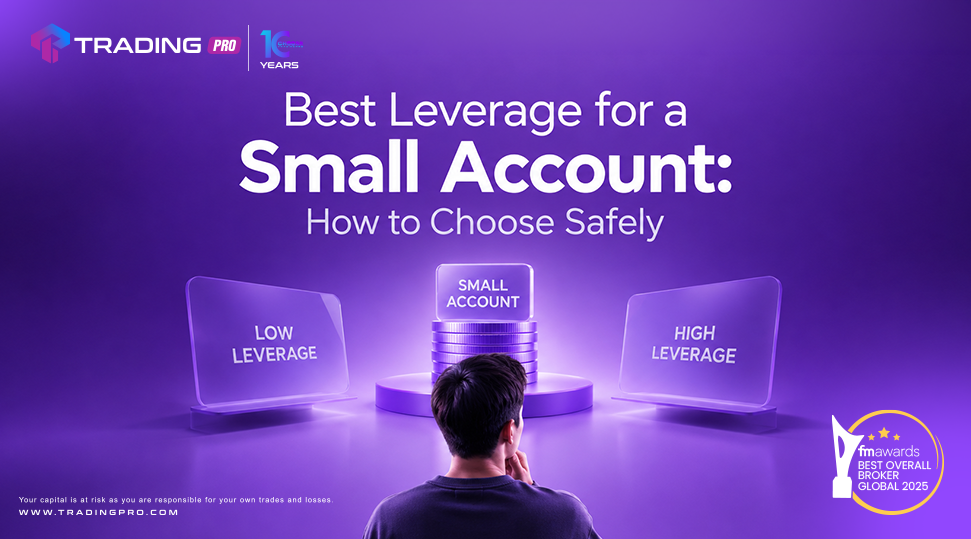
If you are starting out with a modest deposit, one of the first questions you will face is how much leverage to use. Brokers advertise ratios such as 1:30, 1:100, 1:500 and beyond, and it is tempting to assume that higher is better because it lets you do more with less. In reality, choosing the best leverage for a small account is less about maximising what you can open and more about protecting what you have.
This guide explains what leverage is, how it interacts with margin, why small accounts are especially sensitive to it, and how to choose a sensible level based on risk rather than hope.
What Is Leverage in Forex?
Leverage lets you control a larger position than your deposit alone would allow. It is expressed as a ratio. At 1:100 leverage, every unit of your own money controls 100 units in the market.
For example, with 1:100 leverage, a margin of $100 can open a position worth $10,000. Your broker effectively provides the rest, and you are required to keep enough funds in your account to support the trade.
Leverage itself is not good or bad. It is a tool. The problem begins when it is used without understanding that it multiplies both profits and losses.
Leverage and Margin: How They Connect
Margin is the portion of your account set aside to open and maintain a leveraged position. The higher the leverage, the lower the margin needed for the same position size.
Two terms are worth knowing:
- Used margin: the funds currently tied up in your open trades.
- Free margin: the funds available to open new trades or absorb losses.
If losses reduce your equity too far, your broker may issue a margin call or automatically close positions through a stop-out. On a small account, there is very little room between a normal market move and a stop-out if you have sized your trades too aggressively.
Why Leverage Matters More on a Small Account
With a small balance, every dollar counts. High leverage can make it feel as if you can trade "big," but the math works against you.
Consider a simple example. You have $200 and open a $10,000 position using 1:100 leverage. A 1% move against you equals $100, which is half your account. A 2% move would erase it entirely. Even in a relatively calm market, moves of that size can happen quickly, especially around major news.
The key insight is that leverage does not change the risk of the market, it changes the size of the position you can take. What actually determines your risk is position size relative to your account balance.
Common Leverage Levels Explained
The leverage available to you can depend on your broker, account type and the regulations in your jurisdiction. Here is how common levels tend to be used.
Low leverage (around 1:10 to 1:30). Gives smaller positions relative to your deposit. It leaves more room for trades to breathe and is often better suited to beginners and cautious traders.
Medium leverage (around 1:50 to 1:100). Offers more flexibility but requires disciplined position sizing. It is common among experienced retail traders who manage risk carefully.
High leverage (1:200 and above). Allows very large positions from small deposits. It can magnify gains, but it can also lead to rapid losses and stop-outs, so it requires strong risk controls.
What is available to you may differ depending on where you live and which entity you trade with, so always check the terms of your own account.
So, What Is the Best Leverage for a Small Account?
There is no single number that suits everyone, but a few principles can guide your decision.
- Think in terms of risk per trade, not maximum position size. Many traders risk only a small percentage of their account on any one trade. This is controlled by your stop-loss distance and lot size, not by your leverage setting.
- Lower effective leverage is usually safer. Effective leverage is the total value of your open positions divided by your account equity. Keeping this modest gives you a larger buffer against adverse moves.
- Beginners usually benefit from lower leverage. While you are learning, mistakes are normal. Lower leverage means those mistakes cost less.
- Match leverage to your strategy. A short-term scalper using tight stops may use leverage differently from a swing trader holding positions for days. Your approach should drive the choice.
- Consider your stop-loss and volatility. Wider stops need smaller positions. A pair that moves sharply requires more caution than a quiet one.
In practice, many cautious traders on small accounts choose a moderate account leverage setting but deliberately trade with a much lower effective leverage than the maximum available.
A Simple Position Sizing Example
Let's say you have a $500 account and decide to risk 1% per trade, which is $5.
You plan a trade with a stop-loss 25 pips away. To find a position size where a 25-pip loss equals about $5, you divide the amount at risk by the pip distance: $5 ÷ 25 pips = $0.20 per pip. On many major pairs, that corresponds to roughly 0.02 of a standard lot.
Notice what happened. We never needed to choose the maximum leverage. We started with risk, then worked out the position size. The leverage setting only needs to be high enough to allow the margin for that position, and no higher.
Pip values vary by pair and account currency, so use your platform's calculator to confirm your numbers.
Using Smaller Account Types Wisely
Some brokers offer account types with smaller contract sizes, such as cent or micro accounts, where available. These can help small-balance traders size positions more precisely and practise real-market execution with lower exposure. Whatever account type you use, the same rules apply: risk a small amount per trade, use a stop-loss, and do not overextend.
Common Leverage Mistakes on Small Accounts
- Choosing maximum leverage by default. Just because it is available does not mean you should use it fully.
- Opening oversized positions. This is the fastest way to trigger a stop-out.
- Ignoring the margin level. Watch your margin level closely, especially when holding multiple trades.
- Trading without a stop-loss. Leverage and unprotected positions are a risky combination.
- Trying to grow the account too fast. Chasing big returns from a small balance often leads to taking excessive risk.
- Trading through major news without a plan. Volatility can cause rapid moves and wider spreads.
Tips for Managing Leverage Safely
- Start on a demo account. See how margin and position size behave before using real money.
- Define your risk per trade in advance. Calculate position size from your stop-loss, not the other way around.
- Keep a margin buffer. Avoid using most of your available margin at once.
- Limit the number of open trades. Several correlated positions can multiply your exposure.
- Review regularly. Track your results and adjust your approach as you gain experience.
Final Thoughts
The best leverage for a small account is the level that lets you follow your risk rules comfortably, not the highest number on offer. Focus on position sizing, stop-losses and keeping effective leverage low, and treat leverage as a tool that must be used with care. Small accounts can still be managed well, as long as discipline comes before ambition.
Ready to start trading with a plan? Sign up with TradingPRO and explore your account options, and follow us on social media for more education and market updates.


