


- Published on: 2026-07-23 10:15:00
What are Commodity CFDs? A High-Performance Guide for 2026 Traders
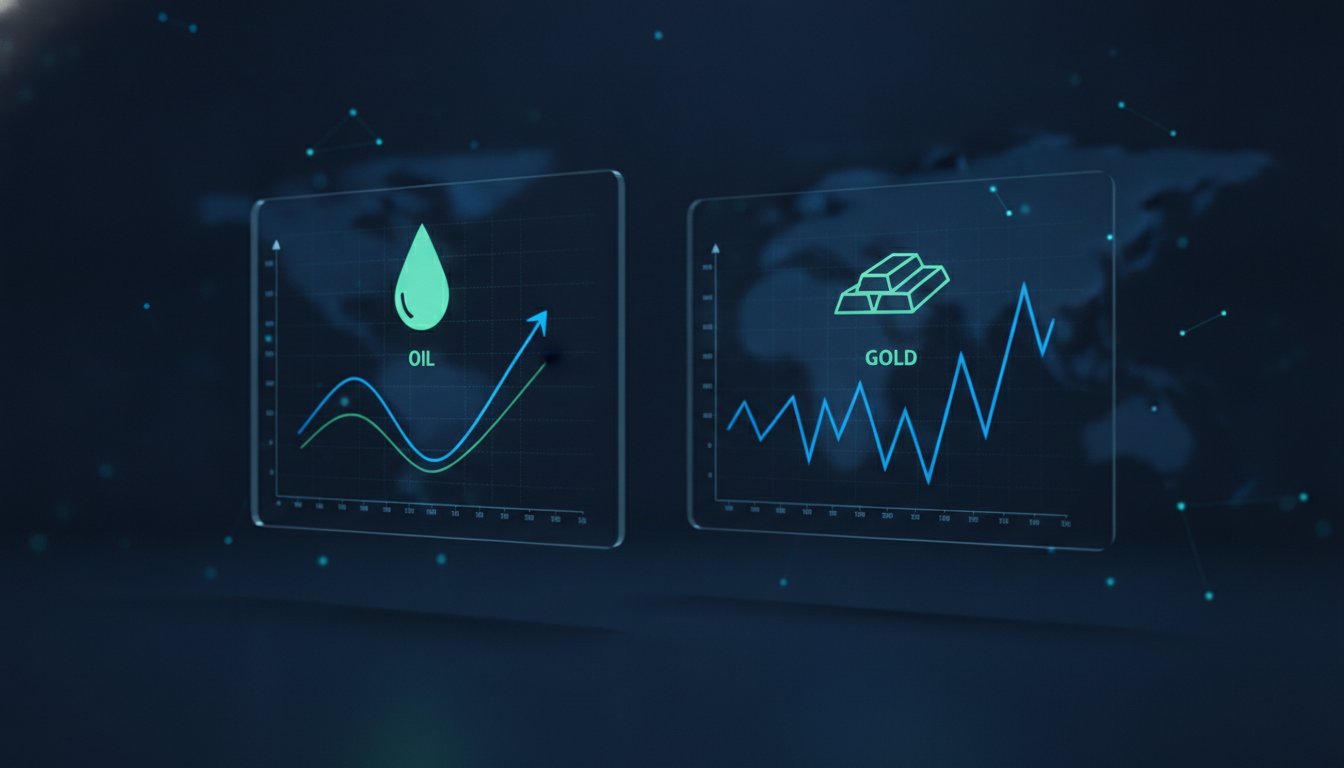
You don't need a tanker in the Persian Gulf or a vault full of gold bars to dominate the global markets in 2026. With crude oil prices surging 27.20% in the month leading up to July 23, many traders feel sidelined by the massive capital requirements of traditional futures. You might be wondering, what are commodity CFDs and how can they bridge this gap? It's common to feel overwhelmed by complex contract specs or the fear of high entry costs. We understand that the barrier between you and the world's most vital resources should be a matter of strategy, not just the size of your bank account.
This guide will empower you to master the mechanics of commodity CFD trading. You'll discover exactly how to speculate on price movements in gold, oil, and soft commodities without ever taking physical delivery. We'll break down how to leverage institutional-grade tools to turn market volatility into opportunity. From understanding margin requirements to utilizing social trading ecosystems, you're about to build a clear path to trading global markets with precision and minimal capital. Let's sharpen your edge and unlock the potential of these high-performance assets.
Key Takeaways
- Understand what are commodity CFDs by mastering the contract for difference mechanism, allowing you to profit from price gaps without owning physical assets.
- Navigate the global landscape by distinguishing between high-impact hard commodities like Gold and Crude Oil and essential soft commodities.
- Unlock a strategic advantage with leverage and two-way trading, empowering you to capitalize on market momentum in any direction with minimal capital.
- Secure your performance by mastering risk management, spreads, and the latest 2026 reporting standards to maintain a competitive edge.
- Fast-track your growth using Social Trading to mirror the strategies of seasoned commodity pros or starting your journey with a specialized Rookie Account.
Decoding Commodity CFDs: Trading Global Markets Without Physical Ownership
Capture the price action of Brent Crude or Spot Gold without ever touching a single barrel or bar. This is the reality of the modern market. If you are asking what are commodity CFDs, you are looking at the most streamlined path to global market exposure available today. A Contract for Difference (CFD) is a powerful derivative instrument. It allows you to speculate on price movements without the burden of ownership. You aren't buying the metal; you're trading its value. In 2026, this digital approach is the standard for traders who prioritize agility over physical inventory.
The core mechanism is elegant. You enter a contract with a broker to exchange the difference in the price of a commodity from when the position is opened to when it is closed. If the market moves in your favor, you collect the profit. If it moves against you, you pay the difference. This shift toward pure digital execution has reached its peak in 2026. Speed is the primary currency. By removing the friction of physical handling, you can pivot your strategy in seconds as global economic conditions shift.
The Mechanics of a CFD Trade
Your success hinges on the spread between the opening and closing prices. Every point of movement represents a potential gain or loss based on your position size. When you execute a trade, you are making a definitive move on the direction of an underlying asset. An underlying asset is the real-world commodity, such as copper or wheat, whose value is driven by the constant pulse of global supply and demand. The broker acts as your institutional facilitator. They provide the high-octane infrastructure and liquidity required to execute these contracts in real-time. Understanding what are commodity CFDs means recognizing that the broker manages the technical complexity while you focus on the strategy.
CFDs vs. Physical Ownership: Why Digital Wins
Physical ownership is a relic of the past for the high-performance trader. Holding actual goods requires massive storage fees, insurance premiums, and complex transportation logistics. Digital execution wipes those costs off your balance sheet instantly. You can enter and exit the market in milliseconds, reacting to geopolitical shifts as they happen. This frictionless experience ensures your capital is working for you, not being drained by overhead. For those ready to step into the arena, accessing these global markets is seamless through a Rookie Account. This infrastructure provides the same institutional-grade speed used by veterans, but it is specifically scaled for your entry into the commodity space. Digital trading doesn't just offer convenience; it offers a competitive edge that physical ownership cannot match.
Hard vs. Soft Commodities: Navigating the Major CFD Markets
Mastering the global arena requires a clear map of the assets in play. Commodities generally fall into two distinct categories: hard and soft. Hard commodities are natural resources that must be mined or extracted, such as gold and oil. Soft commodities are agricultural products or livestock that are grown, like wheat and coffee. Grasping this distinction is vital when learning what are commodity CFDs, as the market forces driving a barrel of oil differ sharply from those affecting a bushel of corn. Success in this field demands that you understand these drivers with institutional precision.
In 2026, the "Big Three", Gold, Crude Oil, and Natural Gas, continue to dominate the leaderboard. Geopolitical volatility in the Middle East has kept Crude Oil prices aggressive, hitting $89.47 per barrel on July 23, 2026. Meanwhile, the global shift toward electrification has elevated "Green Commodities" like copper and lithium to elite status. These metals are no longer just industrial components; they're the fuel for the tech revolution. Forbes explains CFD trading as a way to capture these massive swings without the logistical nightmare of physical storage. Knowing what are commodity CFDs gives you the tools to capitalize on these shifts in real-time.
Energy and Metals: The Titans of Volatility
Crude oil remains the world's most traded commodity. You'll choose between WTI, the US benchmark, and Brent Crude, the international standard. Both offer high-octane price action. Gold retains its crown as the ultimate safe haven, especially during the inflationary cooling trends seen in mid-2026. Natural gas provides a different rhythm, reacting sharply to seasonal shifts and pipeline politics. These assets allow you to pivot your strategy as global power dynamics evolve and market liquidity peaks.
Agricultural Commodities: Trading the "Soft" Markets
Soft markets like wheat, sugar, and coffee operate on a unique cycle. They are highly sensitive to climate data and supply chain disruptions. While tech stocks might stall, agricultural CFDs often move independently, providing a crucial layer of diversification for your portfolio. Trading these requires precision and a focus on weather patterns and harvest reports. If you're ready to execute on these global trends, open your account today and start building your commodity legacy with professional-grade tools.
The Strategic Edge: Why Traders Choose CFDs for Commodities
Strategic dominance in the 2026 markets requires more than just capital. It requires efficiency. When you master what are commodity CFDs, you unlock a toolkit that traditional physical markets simply can't match. You gain the ability to move with the speed of global events, accessing 24/5 markets that never sleep. This isn't just about trading; it's about adding non-correlated assets to your portfolio to slash total risk. While equity markets might stumble, commodities often surge, providing a robust layer of diversification that keeps your momentum moving forward. You aren't just participating in the market; you're dictating your terms.
The regulatory environment for these instruments is rigorous, ensuring a foundation of institutional stability. In the United States, the Commodity Futures Trading Commission (CFTC) oversees derivative markets to protect participants and maintain market integrity. This institutional oversight reinforces the reliability of the CFD ecosystem. By leveraging these professional-grade structures, you can focus on execution without worrying about the underlying logistics of the assets you trade.
Short Selling: Profiting from Market Downturns
Traditional investing forces you to wait for prices to rise. CFDs break that limitation. Short selling allows you to profit when prices fall. If geopolitical tensions ease and oil prices retreat from their July 2026 highs, a short position lets you capture that downward move. On a high-performance platform, shorting a commodity is as simple as a single click. This isn't just for speculation; it's a professional-grade hedging tool. You can protect your physical interests or other investments by offsetting price drops with CFD gains. It's a two-way street to success.
Capital Efficiency and Scale
Capital efficiency is where the Rookie trader becomes a global force. Leverage is the engine. It allows you to control large market positions with only a small initial deposit, known as margin. This margin acts as collateral, ensuring you have the skin in the game while the infrastructure provides the scale. To dive deeper into how these mechanics work across different asset classes, explore our Forex Trading for Beginners Guide. Leverage is power. Use it with precision to amplify your market presence and achieve institutional-grade results with a Rookie-sized entry.
Managing the Heat: Leverage, Spreads, and Risk in 2026
High performance in the 2026 commodity markets demands more than just a sharp eye for trends. It requires an ironclad grip on your risk parameters. When you ask what are commodity CFDs, you aren't just looking at potential profit; you're looking at a leveraged instrument that requires respect. The most successful traders use micro-lots to manage this heat. Unlike traditional futures that lock you into massive, inflexible contracts, micro-lots allow you to scale your exposure with surgical precision. This ensures your capital is never overextended while you pursue institutional-grade returns.
The cost of doing business in this arena is defined by the spread and overnight financing. The spread is the difference between the Buy and Sell price. As of May 2026, typical crude oil spreads averaged around 0.05 to 0.06 USD, while gold spreads generally sat between 0.20 and 0.50 USD. If you plan to hold a position beyond the market close, you'll encounter overnight financing. This is a small fee for maintaining your leveraged position across sessions. These are the gears of the machine. Ignoring them is not an option for those aiming for the elite tier of trading.
Precision Risk Management Tools
Precision is your best defense against volatility. Use the Trade Hub to calculate your position sizes instantly before you commit. In the high-velocity energy sector, setting realistic profit targets is essential to lock in gains before the market pivots. Furthermore, the modern landscape has evolved to protect the retail trader. Negative Balance Protection is now a non-negotiable standard. Unlike outdated models where you could lose more than your initial deposit, this "safe-haven" feature ensures your account never drops below zero. It's the ultimate security blanket for high-stakes environments.
Understanding Margin Calls
A margin call is the market's way of telling you that your strategy is over-leveraged. This happens when your account equity falls below the required margin to keep your positions open. You can avoid this through proactive portfolio monitoring and the disciplined use of Stop-Loss orders. Stop-Losses are mandatory in 2026, especially with 74% of retail CFD accounts incurring losses due to unmanaged risk. Execution speed plays a critical role here. During a market crash, you need a platform that executes your exit in milliseconds to prevent slippage. Don't leave your capital to chance. Register your account now to access the institutional-grade infrastructure required to navigate these high-pressure moments with confidence.
Elevating Your Strategy: Commodity CFD Trading with TradingPRO
By now, you have a firm grasp on what are commodity CFDs and the mechanics of global resource speculation. Knowledge alone isn't enough to secure market dominance. You need an institutional-grade engine to power your strategy. TradingPRO provides the elite infrastructure required to turn your market thesis into precise execution. Whether you're scalping gold or holding a long-term position in natural gas, our platform delivers the speed and stability of a global leader. You don't just participate in the market; you command it.
A Micro Account changes the game for retail traders. It allows you to enter the commodity arena with minimal capital, providing a safe-haven environment to test your skills without overexposure. This is where precision meets accessibility. High-performance trading shouldn't be reserved for an elite few. We've built a system where every trader can act with the authority of a seasoned pro. Execution speed is the heartbeat of this success. In the gold market, where prices shift in milliseconds, our institutional-grade infrastructure is your primary competitive advantage. Your orders hit the market without delay, capturing the exact price you targeted.
Copy Trading: Replicating Commodity Success
Success in commodities often comes from recognizing patterns that specialists have mastered over decades. Social Trading allows you to bridge that experience gap instantly. You can find and follow experts who live and breathe oil and gold CFDs, replicating their moves in real-time. This frictionless automation removes hesitation from your decision-making process. It's a proactive way to learn while you earn. For a deeper breakdown of how these mirror trading platforms function in 2026, check out our guide on Social Trading vs Copy Trading.
Getting Started: The Path from Rookie to Pro
The journey to becoming a professional commodity trader is structured and decisive. Understanding what are commodity CFDs is your first step toward empowerment, but your choice of partner defines your ultimate success. Follow this path to start your legacy:
- Step 1: Open a Rookie Account to unlock immediate access to global energy, metal, and agricultural markets.
- Step 2: Utilize the Deposit Bonus to expand your trading power and increase your market presence from day one.
- Step 3: Test your commodity thesis on the Social Feed. Engaging with our ecosystem of experts provides the final layer of confidence needed to excel.
The global markets are moving. Geopolitical shifts and technological revolutions are creating unprecedented volatility in resources. With the right tools and a sophisticated partner, that volatility becomes your greatest opportunity. Take the lead and start trading today.
Claim Your Edge in the Global Resource Markets
You've decoded what are commodity CFDs and mastered the mechanics of digital resource speculation. You've seen how digital execution eliminates the heavy overhead of physical ownership while providing the agility to pivot as global markets shift. Success in this arena isn't just about understanding the assets; it's about utilizing the right infrastructure to execute your vision. You're now equipped to turn market volatility into a strategic advantage and move with the speed of a global institution.
TradingPRO delivers the high-octane tools you need to excel. You'll benefit from institutional-grade execution speed that ensures your orders hit the market with surgical precision. Our platform provides the essential security of Negative Balance Protection and the collective intelligence of Social Trading integration. These features empower you to trade with the confidence of a seasoned authority. Don't let the next major price swing pass you by while you're on the sidelines.
Join TradingPRO and Start Trading Commodity CFDs Today. The world's most vital resources are moving. Step into the arena, leverage your expertise, and start building your trading legacy right now. Your path to market dominance begins with a single, decisive move.
Frequently Asked Questions
Are commodity CFDs legal for retail traders?
Commodity CFDs are legal and regulated in many global jurisdictions, including the EU and Australia. In Europe, traders must comply with the updated ESMA transparency rules and reporting standards that took effect in early 2026. Always verify the specific regulations in your country of residence before you start. We maintain institutional-grade compliance to ensure a secure and reliable environment for all market participants.
What is the minimum deposit to start trading commodity CFDs?
The minimum deposit depends on your chosen account tier. Our Micro and Rookie accounts are engineered for accessibility, allowing you to enter the global markets with smaller capital amounts. You can find the exact requirements for each tier on our account comparison page. This modular structure ensures you can start at a scale that matches your current financial goals and experience level.
How does leverage work in gold CFD trading?
Leverage allows you to control a large position in gold using only a small percentage of the total value as margin. When learning what are commodity CFDs, it's vital to recognize that leverage acts as a force multiplier for your capital. While this amplifies your potential for significant gains from small price movements, it also increases your exposure to risk. Precision and discipline are required when managing leveraged positions.
Can I lose more than my initial deposit with TradingPRO?
No, our platform includes Negative Balance Protection to ensure your losses never exceed your account balance. Understanding what are commodity CFDs involves recognizing the risks of volatility, but this safeguard provides a critical safe-haven for your capital. If a market move is too aggressive, our system automatically closes positions to prevent your equity from dropping below zero. You can trade with confidence knowing your liability is capped.
What are the most traded commodities in 2026?
Crude Oil and Gold are the dominant titans of the 2026 commodity markets. Crude oil prices hit $89.47 per barrel on July 23, 2026, following a 27.20% increase in the preceding month. Natural Gas and "Green Commodities" like Copper are also seeing massive trading volumes due to global tech shifts. These assets provide the high-octane volatility that performance-driven traders need to execute successful strategies.
Is there a difference between trading oil CFDs and oil futures?
The main difference is the flexibility in contract size and the method of execution. Oil CFDs allow you to trade in micro-lots, whereas futures require large, standardized contracts on a public exchange. CFDs are cash-settled derivatives, meaning you never have to worry about the physical delivery of actual oil barrels. This digital-first approach offers the speed and ease of use that modern retail traders demand.
How do I choose between a Rookie and a Pro account for commodities?
Choose the Rookie account if you are a beginner looking for a streamlined entry point with institutional-grade support. The Pro account is designed for high-volume traders who require advanced execution features and deeper liquidity. Both tiers grant you full access to our Social Trading ecosystem. Evaluate your trading frequency and strategy complexity to select the account that best facilitates your path to success.
What hours are commodity CFD markets open?
Commodity CFD markets are generally open 24 hours a day, five days a week. They track the operating hours of major global exchanges in New York, London, and Tokyo. This 24/5 availability ensures you can react to geopolitical shifts or economic data releases as they happen. Always check the specific session times for individual assets like Gold or Brent Crude on our platform to plan your execution.


