



- Published on: 2026-11-03 00:54:00
Understanding Balance, Equity, Free Margin, and Used Margin
1. What Is the Difference Between Balance and Equity?
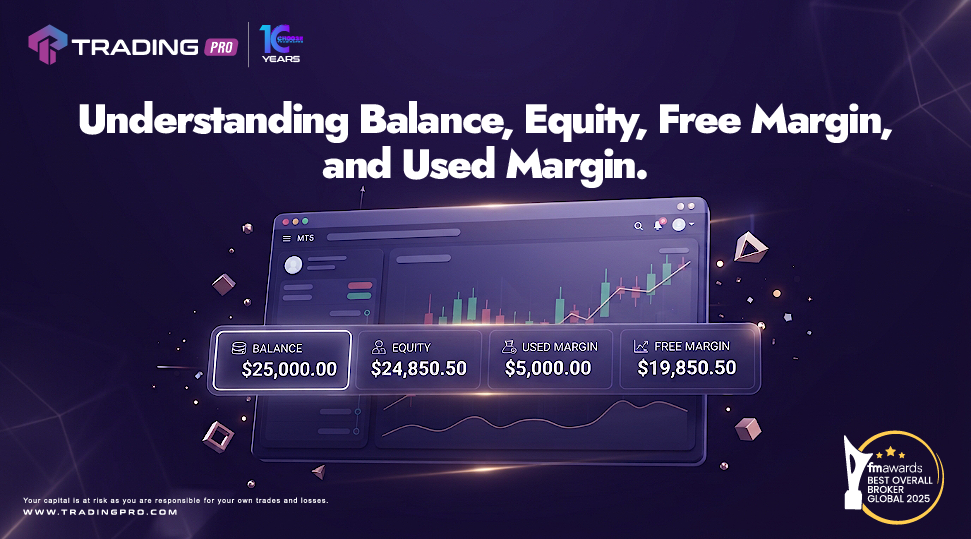
When reviewing a trading account, balance and equity may look similar, but they represent different figures. Balance is the amount in an account after completed transactions have been reflected, including realized profits or losses, deposits, and withdrawals. Equity reflects the current account value by including the floating profit or loss on open positions. Understanding the difference helps traders interpret account information more accurately instead of relying on one figure alone. Learn more about account equity to better understand how it relates to your account balance.
2. How Does Free Margin Differ From Used Margin?
Free margin and used margin help explain how account funds are allocated while positions remain open. Used margin is the amount set aside as a margin requirement for open positions, while free margin generally represents equity minus used margin. Free margin can change as market prices move and the floating profit or loss on open positions changes. Knowing how these figures relate helps traders monitor their account status and understand how much margin remains available.
3. Understanding Your Account Balance
The account balance changes when financial transactions are recorded, such as deposits, withdrawals, and the results of closed positions. However, it does not usually reflect the unrealized profit or loss of currently open positions. For example, an account with a balance of $1,000 may display a different equity figure if an open position is currently showing a floating loss or profit. This is why the balance alone does not provide a complete picture of an account's current value.
4. Why Equity Changes With Market Movements
Equity gives traders a more immediate view of their account value because it accounts for floating profit and loss. If an open position moves into profit, equity generally increases; if the position moves into loss, equity generally decreases. These changes can occur even when no position has been closed. Monitoring equity alongside balance helps traders understand how current market movements affect their account and why the two figures may differ.
5. What Determines Used Margin?
Used margin depends on factors such as the instrument being traded, position size, leverage, and the broker's margin requirements. Opening additional positions may increase the margin required, although the exact calculation depends on the instrument and account conditions. Traders should review the applicable contract specifications and margin rules before opening positions. Understanding these requirements is particularly important when trading CFDs, where leverage can increase both market exposure and potential losses.
6. How to Calculate Free Margin
Free margin is generally calculated by subtracting used margin from equity. For example, if an account has equity of $1,000 and used margin of $250, the free margin would be $750. If equity changes because of floating profit or loss, free margin can change as well, even if the positions remain open. This calculation helps explain how much equity is not currently allocated to margin requirements, but it should not be interpreted as a guarantee that additional positions can safely be opened.
7. Understanding Margin Level in MT5
Margin level expresses the relationship between equity and used margin, usually as a percentage. It is commonly calculated by dividing equity by used margin and multiplying the result by 100. For example, equity of $1,000 and used margin of $250 produce a margin level of 400%. Brokers may apply specific margin-call and stop-out thresholds, so traders should understand the rules that apply to their account. Explore the MetaTrader 5 platform offered by TradingPRO to learn more about its features.
8. Common Mistakes When Reading Account Figures
One common mistake is treating the balance as the full measure of current account value while overlooking floating losses on open positions. Another is assuming that free margin represents money that can be used without additional risk. Traders may also overlook how leverage, position size, and changing prices affect equity and margin requirements. Reviewing these figures together provides a clearer understanding of account conditions, although it cannot eliminate market risk or guarantee a particular outcome.
9. Make Account Information Part of Your Trading Routine
Understanding balance, equity, free margin, and used margin is an important part of becoming familiar with a trading platform. Before opening or managing a position, traders should review their account figures, check the relevant margin requirements, and consider how adverse market movements could affect equity. Practising these checks consistently can support more informed decision-making.
To learn more about TradingPRO's platforms, educational content, and latest updates, follow our official social media channels.


