




- Published on: 2026-09-07 13:33:00
Understanding Economic Calendars: What Should You Look For?
Financial markets are constantly influenced by economic developments around the world. Interest-rate decisions, inflation data, employment reports, and other economic indicators can all attract market attention and contribute to changes in market activity.
For anyone following financial markets through TradingPRO, an economic calendar can be a useful resource for staying informed about scheduled economic events and understanding what may be happening in the market.
What Is an Economic Calendar?
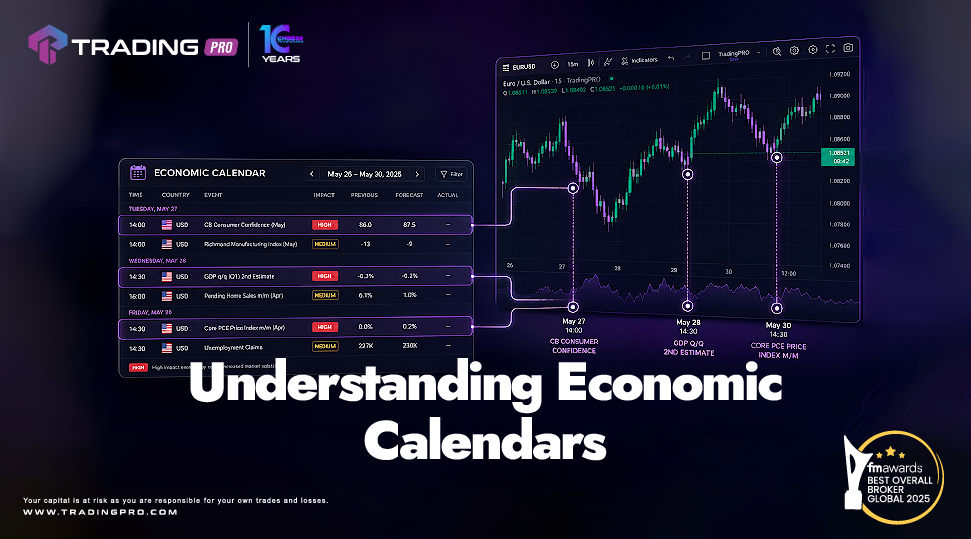
An economic calendar is a tool that lists upcoming and recently released economic events and indicators.
It can typically show information such as the event name, release date and time, previous reading, forecast, and actual result.
TradingPRO provides access to market-related resources that can help users keep track of important economic developments and understand their relevance to financial markets.
Why Do Economic Events Matter?
Economic data can provide information about the health and direction of an economy.
For example, inflation data can provide insight into changes in consumer prices, while employment data can offer information about labour-market conditions. Central-bank decisions can also influence expectations around monetary policy.
Because financial markets respond to changing expectations, these events can become important points of attention for market participants.
TradingPRO's educational content helps users understand the concepts behind these economic indicators rather than simply looking at the numbers.
Previous, Forecast, and Actual
One of the most useful things to understand when reading an economic calendar is the difference between previous, forecast, and actual figures.
Previous:
The result from the previous reporting period.
Forecast:
The figure economists or analysts expected before the release.
Actual:
The figure that was ultimately reported.
TradingPRO encourages users to understand how these figures differ because the relationship between expectations and the actual result can be an important part of understanding market reactions.
What Are High-Impact Events?
Economic calendars often classify events according to their expected level of market importance.
High-impact events may include major interest-rate decisions, inflation releases, employment reports, and GDP data.
These events can attract greater attention because they may influence expectations about economic conditions or monetary policy.
Through TradingPRO's educational resources, users can learn more about these indicators and why they are closely followed by market participants.
Examples of Economic Indicators to Watch
Inflation
Inflation data measures changes in the prices of goods and services and can influence expectations about future monetary policy.
TradingPRO educational content can help users understand terms such as CPI and how inflation data fits into the broader economic picture.
Interest Rates
Central banks use interest rates as one of their main monetary-policy tools.
Interest-rate decisions can influence borrowing costs, currencies, and broader financial-market expectations, making them important events to monitor through an economic calendar.
Employment Data
Employment reports provide information about labour-market conditions.
Changes in employment, unemployment, and wages can contribute to the wider picture of economic health and may influence market expectations.
GDP
Gross Domestic Product, or GDP, measures the overall economic output of a country.
GDP releases can provide another important indicator of economic growth and are therefore commonly included among major economic-calendar events.
How to Use an Economic Calendar Effectively
An economic calendar is most useful when you understand what you're looking at and why it matters.
Before an event, consider:
-
What indicator is being released?
-
Which economy does it relate to?
-
What is the previous figure?
-
What is the current forecast?
-
When is the release scheduled?
-
Why is the event receiving market attention?
TradingPRO's educational approach focuses on helping users build this type of understanding, so an economic calendar becomes more than simply a list of dates and numbers.
Economic Calendar + Market Awareness
Following an economic calendar does not mean every scheduled event will result in a significant market movement.
Market reactions depend on many factors, including expectations, the actual result, broader economic conditions, and other news taking place at the same time.
This is why TradingPRO encourages a broader approach to market education. The calendar can tell you what is scheduled, while education can help you understand what the information means.
Stay Informed with TradingPRO
Understanding economic events is an important part of developing broader financial-market knowledge.
With TradingPRO, users can explore market-related resources and educational content designed to help them better understand economic indicators, financial terminology, and the factors that can influence global markets.
The more familiar you become with economic data and market terminology, the easier it becomes to put daily market developments into context.
Turn Market Data into Market Knowledge
An economic calendar can be a valuable tool for anyone who wants to stay informed about upcoming economic developments.
Rather than focusing only on whether an event is labelled “high impact,” take the time to understand what the indicator measures, why it matters, and how the actual result compares with expectations.
With TradingPRO's educational resources and market tools, you can continue building your knowledge and develop a clearer understanding of the economic events shaping the global financial landscape.
Explore TradingPRO's platforms and tools and continue building your understanding of global financial markets.
Instagram | X / Twitter | Facebook | Telegram | LinkedIn


