



- Published on: 2026-03-23 17:00:00
How to Calculate Lot Size in Forex Trading
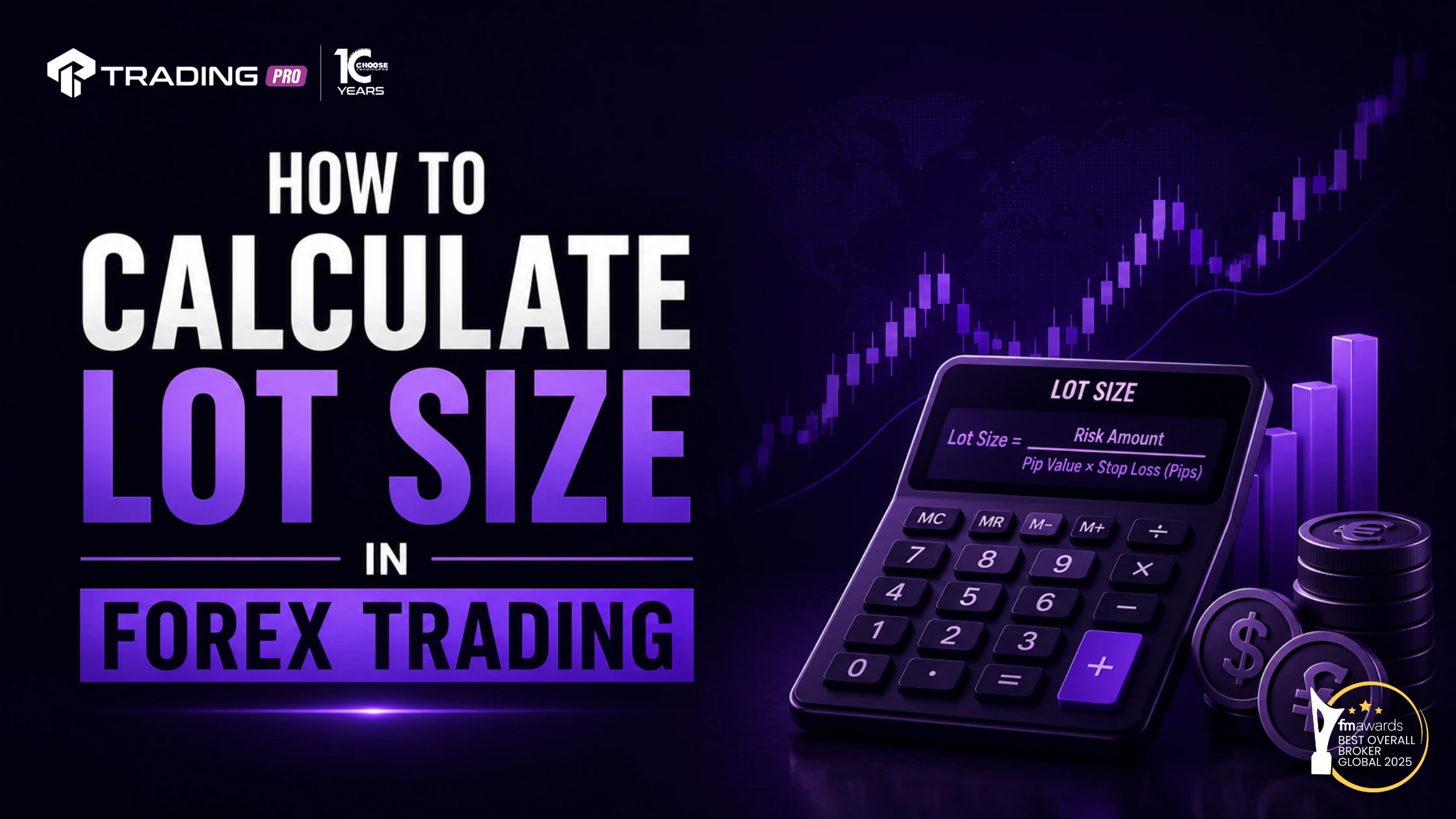
One of the most fundamental — and most overlooked — skills in forex trading is knowing how to correctly calculate your lot size. Get it right, and you protect your capital while giving your strategy room to perform. Get it wrong, and even a solid trading plan can lead to account-damaging losses. This guide breaks it all down clearly, from the basics to the formula and a real worked example.
What Is a Lot Size in Forex Trading?
A lot refers to the position size of your trade. It determines how much of a currency pair you are buying or selling, and directly controls how much each pip movement affects your profit or loss.
There are four standard lot sizes in forex:
- Standard Lot — 100,000 units
- Mini Lot — 10,000 units
- Micro Lot — 1,000 units
- Nano Lot — 100 units
The larger your lot size, the greater the impact every pip movement has on your account balance — in both directions.
Why Lot Size Calculation Matters
Calculating your lot size correctly is not optional — it is the backbone of responsible trading. Done properly, it helps you:
- Manage risk consistently on every single trade
- Maintain discipline regardless of market conditions
- Preserve capital during losing streaks
- Avoid the account-destroying consequences of over-leveraging
Professional traders focus on how much they are risking per trade — not how much they could potentially make. That shift in perspective is what makes consistent profitability possible.
The Formula for Calculating Lot Size
There are four elements you need before you can calculate your lot size:
- Your account balance
- Your risk percentage per trade
- Your stop-loss distance in pips
- The pip value for the pair you are trading
The formula is:
Lot Size = (Account Balance × Risk%) ÷ (Stop Loss in Pips × Pip Value)
A Step-by-Step Worked Example
Let's put the formula into practice with a straightforward example.
Assume the following:
- Account balance: $1,000
- Risk per trade: 2%
- Stop-loss: 50 pips
- Currency pair: EURUSD (pip value for 1 standard lot = $10 per pip)
Step 1 — Calculate Your Risk Amount
2% of $1,000 = $20
This means the maximum you should lose on this trade is $20.
Step 2 — Divide Your Risk by Your Stop-Loss Distance
$20 ÷ 50 pips = $0.40 per pip
You can afford to risk 40 cents for every pip the market moves against you.
Step 3 — Convert to Lot Size
Since 1 standard lot on EURUSD moves $10 per pip:
$0.40 ÷ $10 = 0.04 lots
The correct position size for this trade is 0.04 lots — equivalent to 4 micro lots. This keeps your risk precisely at 2% of your account, regardless of how the trade plays out.
Choosing the Right Risk Percentage
Most professional traders risk between 1% and 2% per trade. If you are still in the early stages of your trading journey, starting at 1% is strongly advisable — it gives you the breathing room to learn without the threat of significant capital loss.
Higher risk percentages can accelerate account growth during a winning streak, but they also amplify losses during drawdowns. The mathematics of recovery make large losses far more damaging than they initially appear, which is why keeping risk small and consistent is a principle professionals rarely compromise on.
Common Lot Size Mistakes to Avoid
Even traders who understand the concept can fall into these traps:
- Ignoring stop-loss distance — your lot size must always be calculated relative to where your stop is placed, not as a fixed default
- Using a fixed lot size instead of a fixed percentage — this leads to inconsistent risk across different trades and market conditions
- Over-leveraging small accounts — taking positions that are too large relative to your balance amplifies emotional pressure and drawdown risk
- Increasing lot size after a loss — this is one of the fastest routes to blowing an account; lot size should be driven by risk rules, never by the desire to recover losses
Lot size should always be determined by your risk management plan — never by emotion, greed, or impatience.
Should You Use a Lot Size Calculator?
Many trading platforms and third-party websites offer built-in position size calculators, and there is nothing wrong with using them as a convenience tool. However, understanding the manual calculation is essential. It ensures you always know exactly what you are risking, keeps you in full control of your risk management, and prevents you from blindly trusting a tool without understanding what it is doing behind the scenes.
Know the formula. Use the calculator as a time-saver — not as a substitute for understanding.
Follow TradingPRO for practical trading education, daily market analysis, and professional insights:
Facebook | Instagram | Telegram | LinkedIn | Twitter (X)


