



- Published on: 2022-02-16 06:38:00
Over-Optimization & Curve Fitting: The Hidden Threat Destroying Forex Trading Strategies
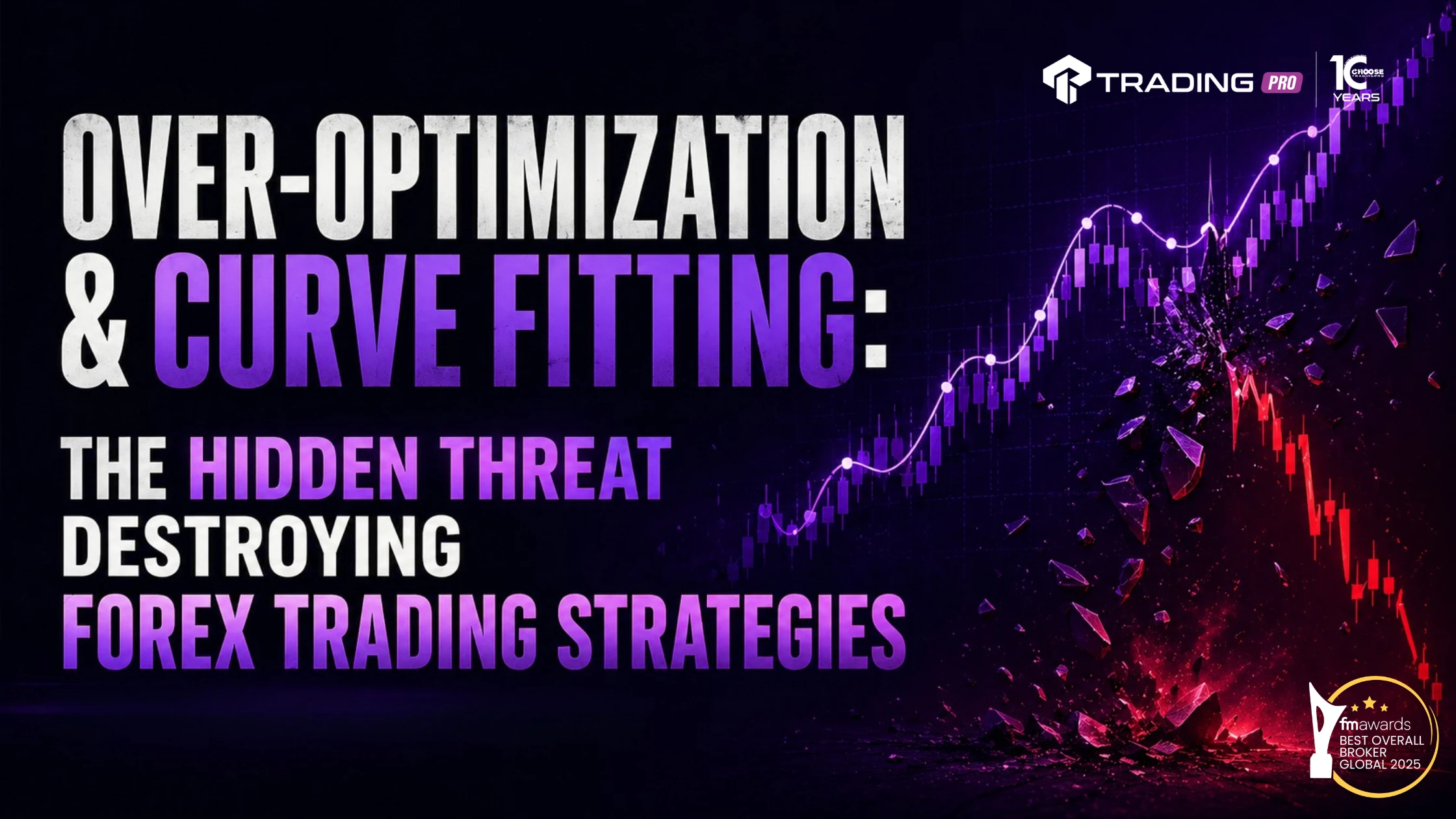
If you've ever built a forex trading strategy that looked flawless in backtesting — but failed the moment it hit live markets — you've likely encountered over-optimization curve fitting. After decades in the foreign exchange market, one thing is clear: curve fitting is one of the primary reasons retail traders struggle to achieve consistent profitability.
This guide will help you understand what over-optimization curve fitting is, why it destroys trading performance, how to identify it, and practical steps to avoid it. If you want long-term success in forex trading, mastering this concept is non-negotiable.
What Is Over-Optimization Curve Fitting?
Over-optimization curve fitting occurs when a trading strategy is excessively adjusted to match historical data so precisely that it loses all effectiveness in live market conditions.
Through repeated backtesting and parameter tweaks — adjusting moving averages, RSI levels, stop-loss distances, take-profit targets — the strategy gradually becomes tailored to past price behaviour rather than future probability.
The result? An impressive backtest. A deeply disappointing live performance.
Why Curve Fitting Is So Dangerous in Forex Trading
The forex market generates enormous amounts of historical data, which makes it dangerously easy to unintentionally design a system that fits past market noise rather than true market behaviour.
Here's what typically happens:
- A trader backtests a strategy and results look average
- Parameters are adjusted repeatedly to improve the numbers
- The equity curve becomes smoother, the win rate climbs, drawdowns shrink
- Eventually, the strategy looks "perfect"
But markets evolve. Central bank policies shift. Volatility cycles change. Liquidity conditions vary. An over-optimised system cannot adapt to any of it — and that is precisely where it breaks down.
Common Signs of a Curve-Fitted Forex Strategy
When developing a forex trading system, watch closely for these red flags:
1. Extremely High Win Rates (80%+) Sustainable strategies rarely maintain such performance across multiple market cycles. If it looks too good, it almost certainly is.
2. Ultra-Smooth Equity Curves Real trading involves volatility in returns. A perfectly smooth equity curve is a sign the strategy has been over-engineered to eliminate natural market noise — not to trade it profitably.
3. Highly Specific Indicator Settings Settings like EMA 17 crossing EMA 43, RSI at 63.5, or a stop-loss of exactly 27 pips are warning signs. If small parameter changes dramatically reduce performance, the strategy lacks robustness.
4. Limited Testing Scope If the strategy only works on one currency pair and one timeframe, it likely does not have a genuine, repeatable edge — it has simply been fitted to a specific set of historical conditions.
The Difference Between Optimization and Over-Optimization
Optimization is healthy and necessary. Professional traders regularly optimise position sizing, risk management rules, and trade management processes.
The distinction lies in validation.
Healthy optimization includes:
- Out-of-sample testing on unseen data
- Multi-pair validation across different instruments
- Testing across varying market conditions (trending, ranging, volatile)
- Realistic drawdown expectations
Over-optimization focuses on:
- Maximising historical profit at any cost
- Eliminating drawdowns entirely
- Producing a flawless backtest regardless of what that takes
Perfection in backtesting is almost always a warning sign, not a green light.
How to Avoid Curve Fitting in Forex Trading
1. Keep Your Strategy Simple
The more variables you introduce, the easier it becomes to overfit. Focus on the fundamentals: market structure, trend direction, clear entry triggers, and logical stop placement. Simplicity is not a weakness — it is what gives a strategy durability across changing conditions.
2. Use Out-of-Sample Testing
Split your historical data into a development set and a validation set. Build your strategy on the development data, then test it untouched on the validation set. If it fails there, it likely has no real edge.
3. Forward Test Before Scaling
Backtesting is theoretical. Forward testing reveals reality. Trade on a demo account or with minimal position sizes before committing meaningful capital. This step is where many promising-looking strategies are correctly shelved.
4. Prioritise Risk Management Above All
Professional forex traders rarely risk more than 1–2% of capital per trade. Capital preservation ensures you remain in the game even when performance fluctuates — and it always will.
Final Thoughts: Robustness Beats Perfection
The goal of forex trading is not to build a perfect historical model. The goal is to develop a robust system that can survive and adapt to changing market conditions.
Markets are driven by economic data, interest rate cycles, geopolitical risk, and liquidity shifts — forces that no backtest can fully account for. A curve-fitted strategy breaks the moment conditions change. A robust strategy adapts.
If you want sustainable profitability in the forex market, trade probability — not perfection.
Follow TradingPRO for daily market analysis, strategy breakdowns, and professional trading insights:
Facebook | Instagram | Telegram | LinkedIn | Twitter (X)


