




- Published on: 2026-10-28 18:46:00
The Hidden Cost of Overtrading
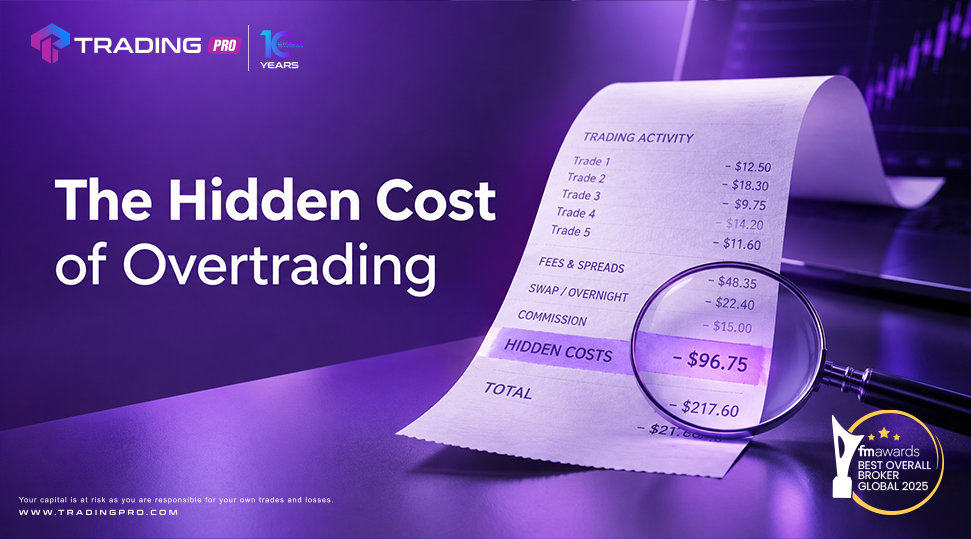
More time in front of a chart does not automatically lead to better trading results. Yet when markets are active, it can be tempting to treat every price movement as a potential opportunity.
A trader may enter a position after seeing a sudden move, open another after closing the first, and continue looking for trades even when no clear setup appears. Over time, this behavior can become a habit, making it harder to distinguish between a valid trading opportunity and an impulsive decision.
This pattern can lead to overtrading: taking more trades than a strategy or trading plan reasonably calls for. The consequences can extend beyond financial costs, affecting concentration, discipline, and the quality of decision-making.
Understanding why overtrading occurs and recognizing its warning signs can help traders evaluate their activity and establish a more structured approach to participating in financial markets.
Why Traders Take Too Many Trades
Overtrading can develop for different reasons, and the causes are not always immediately obvious.
Some traders feel that they need to remain active to make progress. When the market is moving, sitting on the sidelines may seem unproductive, even when there is no setup that meets their criteria. This can encourage them to enter positions based on incomplete signals or short-term price movements.
Impatience is another common factor. A trader following a strategy that requires several conditions to align may become frustrated while waiting for confirmation. Instead of allowing the opportunity to develop, they may enter early or accept a setup that only partially matches their plan.
Emotional reactions can also contribute. After a loss, a trader may try to recover quickly by opening additional positions. After a profitable trade, excitement or overconfidence may encourage them to take risks they would normally avoid.
In each case, the decision to trade becomes driven by the desire to act rather than by a clearly defined opportunity. Recognizing this shift is an important step toward reducing unnecessary activity.
How Frequent Trading Can Increase Costs
Every trade should be evaluated in the context of its potential benefits and associated costs.
Depending on the instrument and account conditions, trading costs may include spreads, commissions, and overnight financing charges. More frequent trading can increase the cumulative effect of these costs, particularly when positions are opened and closed repeatedly without a clear strategic reason.
For example, a trader may identify several small price movements and enter a new position each time. Even if the market moves in the expected direction on some of these trades, the combined costs can reduce the net result. A strategy that appears reasonable before transaction costs may perform differently after those expenses are included.
Frequent entries can also expose traders to more market situations that do not fit their strategy. Each additional position introduces another decision about entry, exit, and risk management. When these decisions are made impulsively, the likelihood of departing from the original plan may increase.
The relevant question is not simply how many trades a person takes. It is whether each trade meets a defined purpose, whether the expected opportunity justifies the associated costs, and whether the combined exposure remains appropriate.
Recognize the Warning Signs of Overtrading
Overtrading is not always obvious while it is happening. A trader may believe they are responding to opportunities when they are actually reacting to boredom, frustration, or the pressure to remain active.
Warning signs may include:
-
Entering trades without the usual confirmation.
-
Taking positions simply because the market is moving.
-
Repeatedly increasing activity after losses.
-
Ignoring daily risk limits or position-sizing rules.
-
Feeling uncomfortable when not holding a position.
-
Opening similar positions without considering their combined exposure.
-
Making decisions without recording a clear trading rationale.
-
Continuing to trade after concentration has declined.
One warning sign alone does not necessarily mean a trader is overtrading. The more useful approach is to examine whether these behaviors occur repeatedly and whether they lead to decisions that fall outside the established strategy.
Keeping a trading journal can help reveal these patterns. By recording the reason for each entry, the market conditions, and any deviation from the trading plan, traders can review whether their activity reflects deliberate decisions or emotional reactions.
Understand the Difference Between Activity and Progress
A common misconception is that taking more trades creates more opportunities to earn a profit. In reality, the number of positions opened does not determine the quality of a trading process.
Some strategies are designed for frequent entries, while others depend on waiting for specific market conditions that may appear only occasionally. Both approaches can involve different levels of activity without necessarily indicating a problem.
The important distinction is whether the trades follow a defined method.
Consider a trader who takes three positions during a session, each based on the same entry criteria and predefined risk limits. Another trader takes ten positions, including several entered out of boredom or frustration. The second trader is not necessarily using a better approach simply because they are more active.
Evaluating performance requires looking beyond trade frequency. Traders should consider the quality of their setups, adherence to their rules, transaction costs, and overall risk exposure.
A structured strategy provides a reference point for determining whether trading activity is appropriate. Without that reference, it becomes difficult to distinguish productive participation from unnecessary trading.
Create a Structure for Better Trading Decisions
A practical way to reduce unnecessary trades is to establish clear entry criteria before the trading session begins.
Traders can identify the markets they intend to monitor, the conditions that qualify as a setup, and the risk limits they will follow. They can also decide in advance when to stop trading for the session.
These guidelines help reduce the need to make every decision in response to immediate market movements.
For example, a trader may require confirmation from a specific technical indicator or price pattern before entering a position. If those conditions are absent, the trade is excluded regardless of how quickly the market is moving.
Predefined limits can also help traders manage their behavior after a difficult sequence of trades. A maximum daily loss or a predetermined stopping rule can provide a clear reason to step away instead of attempting to recover losses through additional positions.
Such limits should reflect the trader's strategy, account circumstances, and risk tolerance. They do not guarantee a positive outcome, but they can provide a more consistent framework for decision-making.
Monitor Overall Risk, Not Just Individual Trades
Overtrading can become particularly problematic when several positions are opened without considering their combined exposure.
A trader might enter multiple positions in different instruments that respond to similar market factors. Although each position may appear manageable on its own, their risks can overlap. If the underlying market moves against those positions, the combined loss may be larger than expected.
Repeated entries can also cause a trader to exceed their intended risk allocation. This may happen when new positions are opened before existing trades are closed or when position sizes increase after losses.
Monitoring total exposure helps traders assess how their positions interact rather than evaluating each one in isolation.
Before opening another trade, it can be useful to review existing positions, planned stop losses, and the potential effect of another adverse market movement. This encourages traders to consider the overall portfolio of open trades rather than treating each entry as an independent decision.
Risk management remains important regardless of how frequently a strategy trades. A disciplined approach requires understanding both the risk of an individual position and the cumulative exposure created by multiple positions.
Use a Trading Journal to Identify Behavioral Patterns
A trading journal can help traders understand when and why unnecessary activity occurs.
In addition to recording entry and exit details, traders can note how many positions they opened during a session, whether each trade followed their criteria, and what influenced their decisions.
After reviewing several sessions, they may discover that impulsive trades occur more frequently after a loss, during periods of low market activity, or when they have spent too long monitoring charts without a break.
These observations provide a basis for making targeted adjustments. If boredom is a recurring trigger, a trader might establish specific chart-review periods instead of continuously searching for opportunities. If losses tend to lead to additional impulsive entries, a predefined break after a difficult trade may help interrupt the pattern.
The goal is not to eliminate every mistake. It is to identify recurring behaviors and evaluate whether changes to the trading routine improve consistency.
Traders should also avoid drawing strong conclusions from a small number of sessions. Reviewing behavior over a meaningful period provides more context and helps distinguish a recurring tendency from an isolated event.
Understand That Waiting Is Also a Decision
Not every market movement offers a suitable opportunity.
Price can move quickly without providing a clear entry signal, and a market that appears promising at first may fail to meet a strategy's requirements. Entering simply to avoid missing out can introduce risk without a well-defined reason.
Choosing not to trade when conditions do not meet a plan can be a deliberate decision rather than a missed chance. This distinction helps traders focus on the quality of their process instead of measuring progress by activity alone.
Waiting does not mean ignoring the market. It means observing price behavior, evaluating available information, and acting only when the conditions align with the established approach.
Over time, this can help traders develop a more consistent routine in which decisions are guided by predefined criteria rather than by the pressure to participate in every market movement.
Conclusion
Overtrading can increase transaction costs, create unnecessary exposure, and make it harder to follow a consistent strategy. It often begins when the desire to act replaces the discipline to wait for suitable conditions.
By setting entry criteria, monitoring overall risk, maintaining a trading journal, and reviewing behavioral patterns, traders can make more deliberate decisions about when to participate in the market.
The objective is not to take the fewest possible trades. It is to ensure that trading activity serves a clear purpose and remains consistent with the chosen strategy and its risk parameters.
TradingPRO promotes a structured approach to trading built around market awareness, practical knowledge, and responsible risk management.
Trading involves risk. A disciplined process cannot eliminate losses, but it can help traders evaluate decisions more consistently.
Start Your Trading Journey with TradingPRO
Ready to take the next step in your trading journey? Register your TradingPRO account and explore the available trading options.
Want to keep learning about the markets? Follow TradingPRO across our social media channels for market insights, trading education, and updates.


