





Entry Rules
Learn the three parts every entry rule needs, why setup and trigger differ, and how confluence at the right location produces the strongest entries.
Authorship
Written by

Forex Market Analyst , an ICT Chartered Graduate with 18 years of live trading experience in forex, gold, and crypto.
Reviewed by

Forex market analyst and educator with a strong focus on technical analysis and trader psychology.
Key Takeaways
- An entry rule has three components: a location where the trade makes structural sense, a trigger that signals the moment to act, and a confirmation that reduces the probability of acting on noise. All three must be defined before the trade is opened.
- The setup and the trigger are different things. The setup is the broader condition that makes a trade possible. The trigger is the specific moment within that setup that says enter now. Confusing the two leads to entering too early or chasing entries that have already moved.
- Entry rules are most reliable when multiple independent signals align in the same direction at the same location. A pullback to support confirmed by a candlestick pattern and a recovering RSI is a stronger entry than any one of those signals alone.
What Are Entry Rules?
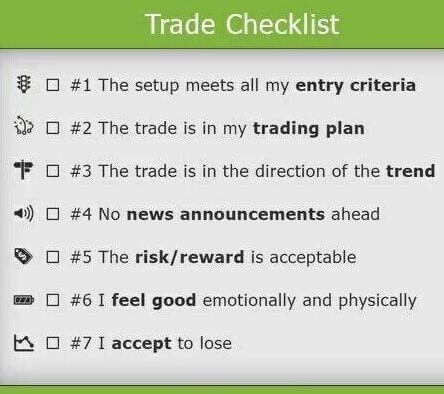
One of the biggest reasons traders lose money is not because they cannot analyse the market. It is because they enter trades without a clear reason. Some buy because price is moving quickly. Others sell because an indicator changes direction. Many enter simply because they are afraid of missing out. Professional traders do things differently. Before placing a trade, they wait for specific conditions to be met. Those conditions are entry rules, and they exist to replace emotional decisions with a structured, repeatable process.
If you have not yet read Risk Management, start there before continuing.
Entry rules are the predefined conditions that must all be satisfied before a position is opened. They answer one question that should have a clear answer before any trade: why am I entering this trade right now. If that question cannot be answered precisely, the trade should wait. Entry rules remove guesswork by defining the location where a trade is considered, the trigger that confirms the moment to act, and the additional signal that increases confidence the trigger is genuine. All three are required. A location without a trigger is a watch list, not a rule. A trigger without a location is a signal without structural context. A rule missing confirmation fires on noise as often as on genuine movement.
How Does It Work?
The five-step entry sequence
Every entry decision follows the same sequence. Working through it in order, before any trade is placed, is what separates a rule from a reaction.
Step 1: Identify the trend
Determine the overall market direction on the higher timeframe before doing anything else. Is the pair making higher highs and higher lows? Lower highs and lower lows? Is it moving sideways? Trading with the prevailing trend on the higher timeframe increases the probability of success on the lower timeframe. Any setup that does not pass the trend filter does not proceed to the remaining steps.
Step 2: Wait for price to reach an important area
Rather than entering at any point in the trend, wait for price to reach a level that attracts genuine market interest: established support or resistance, a trendline, a moving average that has acted as dynamic support, or a retest of a recently broken level. These areas are where the structural justification for the trade exists. The location is where to watch. It is not yet where to act.
Step 3: Look for the trigger
The trigger is the specific event that converts a setup into an active trade. It must be objective: not when price looks strong at the level, but when a specific candle pattern completes, a defined crossover occurs, or price closes through a specific threshold. A bullish engulfing candle closing above the support zone is a trigger. Price approaching the support zone is not. The trigger fires at a defined moment that can be identified in real time without ambiguity.
Step 4: Check for confirmation
Confirmation is an independent signal that supports the trigger. If the trigger is a price action candle, confirmation comes from an indicator: RSI recovering from below 40, MACD histogram expanding in the direction of the trade. If the trigger is an indicator crossover, confirmation comes from structure: a higher low forming at the level. Confirmation filters out triggers that appear at valid locations but lack any supporting evidence. Over a large sample, filtering for confirmation improves the quality of trades taken without eliminating the majority of setups.
Step 5: Confirm the risk to reward
Before entering, verify that the distance between the entry and the logical stop loss, compared to the distance between the entry and the target, meets the minimum requirement defined in the strategy. A structurally sound setup with a poor risk to reward is not worth taking. Many traders require at least 2:1. If the required risk to reward is not available at the current entry level, the trade is skipped regardless of how strong the other conditions appear.
The setup versus the trigger
These two concepts are frequently confused and the confusion is expensive. The setup is the broader condition that makes a trade possible: price is in an uptrend, it has pulled back to a key level, and the conditions for a long entry are in place. The trigger is the specific moment within the setup where the entry is taken. The setup can be in place for hours or days before the trigger fires, or it may never fire at all. Entering while the setup is in place but before the trigger fires means entering before the market has shown any sign of confirming the expected reaction. That is not early entry. It is entering without the evidence the rule requires.
Multiple timeframe entry
The most reliable entry framework uses a higher timeframe to define the structural justification and a lower timeframe to find the precise entry moment. The daily chart shows that price has pulled back to a key support zone in an uptrend. The 4H chart shows the specific candle pattern and indicator confirmation that says act now. This gives the trade the strategic context of the higher timeframe and the precision of a lower timeframe entry, with a stop that reflects the lower timeframe structure rather than the wider swings of the daily.
Confluence
Confluence is the condition where multiple independent signals align at the same moment. A candlestick trigger at a support level that also coincides with a Fibonacci retracement, an RSI reading recovering from oversold, and a moving average acting as dynamic support produces a stronger entry than any one of those signals alone. Before taking any trigger, count the independent confirming signals. A trigger at a level with no additional confirmation is the minimum. A trigger where three or four independent factors agree is the setup worth prioritising.
Good entry rules are simple
More conditions do not automatically produce better trades. Too many requirements lead to hesitation, missed opportunities, and an inability to apply the rules consistently under time pressure. Good entry rules are clear, objective, and easy to apply. The test: if two traders with no prior discussion can read the rules and reach the same entry decision on the same chart, the rules are specific enough. If they would disagree, the rules are too vague and need to be rewritten with more precision before any testing begins.
Why Entry Rules Matter
Without entry rules, the same patterns appear repeatedly: chasing price after missing an intended entry, entering too early before any confirmation, buying near resistance because the trade feels strong, selling near support because a losing position has been held too long, and changing the approach after every loss without enough data to know whether the original approach was actually flawed. Clear entry rules eliminate all five of these behaviours by replacing judgement in the moment with a decision made in advance. They also make it possible to evaluate whether an approach works. A rule that cannot be stated precisely cannot be back-tested, and a rule that cannot be back-tested has no data behind it.
Example
The EUR/USD setup documented by CapitalStreetFX on February 26, 2026 illustrates all three entry components working together in a single setup.
| Entry Component | February 26, 2026 EUR/USD Setup |
| Overall context | EUR/USD climbing steadily since the January 13 reversal; falling wedge resolved to the upside |
| Location | Pullback to 1.1790 to 1.1800, described as textbook post-breakout retest of the wedge breakout level |
| Trend filter | Pair above all key short-term moving averages; upward bias confirmed while price holds above 1.1750 |
| Trigger | Bullish Engulfing or Morning Star candle completing on the H4 chart at the 1.1790 to 1.1800 zone |
| Confirmation | Falling wedge breakout momentum intact; fundamental alignment: ECB pause contrasting with Fed cut expectations |
| Invalidation | Close below 1.1750 removes the structural justification for the setup |
| Source | CapitalStreetFX market analysis, 26 February 2026 |
The three components are clearly separated. The location is 1.1790 to 1.1800, the retest zone of the falling wedge breakout. The trigger is a bullish engulfing or morning star candle completing on the H4. The confirmation comes from two independent directions: the falling wedge breakout momentum that preceded the pullback, and the fundamental tailwind from the ECB to Fed policy divergence confirmed in published analysis on the same day.
What the analysis does not do is enter simply because price has returned to 1.1790. The location defines where to watch. The trigger defines when to act. Without the trigger completing, there is no trade, even if the location, trend filter, and fundamental context are all aligned. That discipline is what the five-step sequence enforces.
Why It Matters
Entry rules matter because they determine the average quality of entries across a large sample of trades, and average entry quality directly affects expectancy. An entry taken at the right location but without a trigger fires on noise as often as on genuine signal. Over 100 trades, that produces a lower win rate and smaller average wins than the same location with a specific trigger applied consistently.
Defined entry rules also make back-testing possible. If the rule is specific enough to apply without judgement, it can be tested against historical charts to see how it has performed. A rule that cannot be back-tested because it requires real-time interpretation cannot be evaluated, which means the trader has no data on whether it has a positive edge.
The relationship between entry quality and stop placement is direct. A precise entry at a defined location produces a smaller required stop because the invalidation point is close to the entry. A vague entry taken in the middle of a range produces a larger required stop to avoid being hit by normal price movement. Smaller stops at the same risk percentage allow better reward to risk ratios on every trade taken. For a deeper look at how entry precision connects to stop placement and position sizing, read Risk Management alongside this topic.
Common Mistakes
| Mistake | Why it matters | |
| Mistake 1 | Entering based on location alone without waiting for a trigger | A support level is a place to watch for an entry, not the entry itself. Price can and frequently does continue through levels that have held before. The trigger is the market's signal that it is reacting to the level as expected. Without it, the entry is based on hope that the level holds, not on evidence that it is holding. |
| Mistake 2 | Confusing the setup with the trigger and entering too early | When the setup is in place, the temptation to enter before the trigger fires is strong. The setup looks good, the level is correct, and waiting feels like losing ground. But entering during the setup rather than at the trigger means entering before the market has confirmed the expected reaction. The trigger exists to filter exactly this situation. |
| Mistake 3 | Ignoring the higher timeframe trend filter | An entry that is structurally sound on the 4H chart but is working against the daily trend is fighting a larger force than the setup can overcome. Most failed entries at technically valid locations fail because the higher timeframe flow is dominant. Checking the trend filter on the daily chart before executing any entry on a lower timeframe takes 60 seconds and removes a significant source of losing trades. |
Quick Summary
- A valid entry rule has three components: a location that is structurally justified, a trigger that is specific and objective, and a confirmation from an independent signal. All three must be defined in the written strategy before the market opens.
- The setup and the trigger are different things. The setup is the broader condition that makes a trade possible. The trigger is the specific event that says act now. Entering during the setup before the trigger fires is entering before the market has confirmed the expected reaction.
- Confluence, where multiple independent signals align at the same location and time, produces stronger entries than any single signal alone. Good entry rules are simple enough for two traders to interpret identically. If they cannot, the rules are too vague.
Next Steps
You now have a framework for defining when and how to enter a trade with precision. The next step is equally important and more often neglected.
Exit Rules - Learn how to define stop loss placement from market structure, how to set profit targets that reflect realistic expectations, and how to manage a trade between entry and exit without letting emotion override the plan.
Risk Management - Revisit the full framework for protecting capital and sizing positions, and see how entry precision connects directly to stop placement and the reward to risk ratios available on each trade.
Take Action
Build an entry checklist for your strategy using the five-step sequence: trend direction, key level, confirmation signal, confluence count, and risk to reward. Before entering any trade, work through all five steps in order. If any step is not satisfied, wait. Then take your current entry rule and apply it to a historical chart across the last 20 setups the location would have produced. Note how many triggered, how many confirmed, and what happened after each confirmed entry. Apply the rule consistently across at least 30 demo trades before drawing any conclusions about its effect on results. Patience is often the difference between an average trader and a consistently profitable one. Apply the entry rule consistently across at least 30 demo trades before using it in live trading.


